On the Business of Building — A Column from Cynthia Jiang
You get the work you measure. Choose volume as the metric and a team learns to manufacture it — long after the number has stopped telling you anything true.
“There is a moment most leadership teams reach without noticing it happen: the number they chose to measure productivity quietly becomes the thing their people optimize.”
Not the work behind the number. The number itself.
It rarely looks like a problem at first. The dashboards are healthy. Tickets close, items move, the throughput line points up and to the right. Then you sit in a planning conversation where every visible signal says the team is thriving, and the people in the room who know the work best are quietly certain it isn’t. The gap between those two things is where this starts, and by the time it reaches the dashboard, the decision that caused it was made much earlier and much more quietly.
Fake Work Is a Measurement Problem, Not a Tracking One
This is not a tracking problem. It is a measurement problem. When you measure output by volume, you are counting tasks closed, tickets moved, units shipped. You have not made your team more productive. You have told them, with precision, what to produce. And the easiest thing in the world to produce is volume.
That is what fake work is. Not laziness, and not dishonesty. It is work that exists to satisfy the metric rather than the business. One decision split into six tickets so the count looks healthy. Activity that was always going to happen, logged as if it were an accomplishment. Nobody sets out to manufacture it. The scoreboard asked for volume, and people are reasonable: they give the scoreboard what it rewards.
The cost is not the wasted motion, though there is plenty of it. The cost is that you slowly lose the ability to trust your own numbers. A productivity metric you cannot trust is worse than no metric at all, because you still plan against it. You commit to timelines on it. You decide who is contributing on it. You make real decisions on a signal that has quietly stopped being true.
The erosion is quiet, which is exactly what makes it expensive. No single padded ticket changes anything, so nothing ever triggers a correction. But measure a team on volume for a year and you will have trained an entire organization to produce the appearance of progress, and you will have done it to people who started out wanting to do real work. The metric never announces that it has taken over. You notice it the way you notice any slow loss of trust: not in a single moment, but in the widening distance between what the numbers promise and what actually ships.

The Work the Scoreboard Can’t See
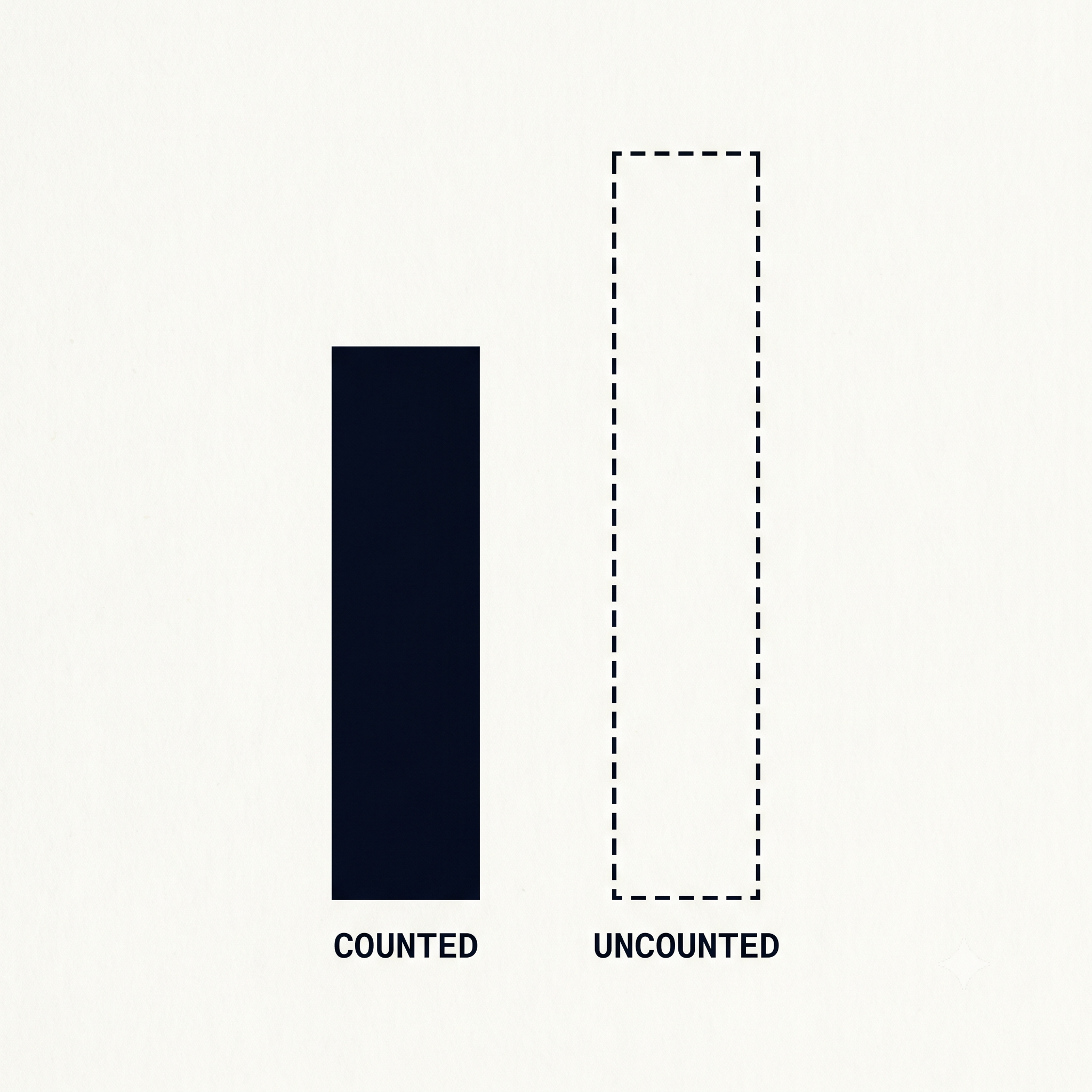
I have watched this play out the same way across organizations. There is always someone whose ticket count is the envy of the team and whose actual contribution no one can quite describe. And there is always the more expensive version, the one that does the real damage: the people doing the work that never produces a countable item. Keeping a fragile system alive. Preventing the outage that, because it was prevented, never appears anywhere. Mentoring the engineer who then needs less help. On a volume scoreboard, that work is invisible, which means the people doing it look idle next to the person generating tickets.
Then the cost surfaces, because leaders start making decisions off the visible number. The busy-looking get rewarded. The essential-but-invisible get questioned. And after a quarter or two, your most reliable people have learned exactly the lesson the scoreboard was teaching: do the work that counts, not the work that matters. That is the moment the metric stops describing your company and starts reshaping it.
“Do the work that counts.
Not the work that matters.”
Not All Valuable Work Is Supposed to Count
The instinct, once a team sees this, is to build a better dashboard: more granular tracking, more categories, a smarter way to count. That is the wrong move, and it is wrong in an instructive way. The distinction that matters is not how precisely you count work. It is whether you have decided what each kind of work is actually for. Not all valuable work is supposed to produce a countable result. Some work exists to deliver something. Some exists to keep the business dependable. Some exists to create value that will not show up for a year. Measuring all of it against a single volume number guarantees that most of it gets distorted. The teams that solve this stop asking “how do we count everything” and start asking “what is this work supposed to produce, and are we measuring it on those terms.” Some essential work should generate nothing on the productivity scoreboard, and seeing that clearly is the point, not a flaw to engineer away.
What AI Did to the Volume Metric
This used to be a slow problem, the kind a company could carry for years without paying full price for it. AI made it urgent. When producing a plausible-looking unit of output costs almost nothing, a metric built on volume stops measuring contribution and starts measuring willingness to generate. The teams getting a real return on AI are not the ones producing more of everything. They are the ones who noticed that throughput became nearly free, and therefore nearly meaningless as a signal, and moved their attention to the work that actually reduces cost and risk. The honest AI investment question was never “how much more can we produce.” It is “now that producing is cheap, can we still tell what was worth producing.”
Change What You Treat as a Signal
So the move, if you lead, is not to retire measurement. It is to stop treating volume as evidence of value. Ask of your own numbers the only question that matters: which of these would still look like progress if no one were counting? The work that survives that question is the work worth planning around. The rest is motion that has learned to look like progress.
We stopped asking how much got done and started asking whether the work that mattered got done, and whether we could even see it. The first surprise was how much of what counted had never been counted, and how much of what was counted turned out not to matter.
You get the work you measure. Measure volume, and you will get volume, long after it has stopped telling you anything true.


We Stopped Rewarding Fake Work
On the Business of Building — A Column from Cynthia Jiang
You get the work you measure. Choose volume as the metric and a team learns to manufacture it — long after the number has stopped telling you anything true.
“There is a moment most leadership teams reach without noticing it happen: the number they chose to measure productivity quietly becomes the thing their people optimize.”
Not the work behind the number. The number itself.
It rarely looks like a problem at first. The dashboards are healthy. Tickets close, items move, the throughput line points up and to the right. Then you sit in a planning conversation where every visible signal says the team is thriving, and the people in the room who know the work best are quietly certain it isn’t. The gap between those two things is where this starts, and by the time it reaches the dashboard, the decision that caused it was made much earlier and much more quietly.
Fake Work Is a Measurement Problem, Not a Tracking One
This is not a tracking problem. It is a measurement problem. When you measure output by volume, you are counting tasks closed, tickets moved, units shipped. You have not made your team more productive. You have told them, with precision, what to produce. And the easiest thing in the world to produce is volume.
That is what fake work is. Not laziness, and not dishonesty. It is work that exists to satisfy the metric rather than the business. One decision split into six tickets so the count looks healthy. Activity that was always going to happen, logged as if it were an accomplishment. Nobody sets out to manufacture it. The scoreboard asked for volume, and people are reasonable: they give the scoreboard what it rewards.
The cost is not the wasted motion, though there is plenty of it. The cost is that you slowly lose the ability to trust your own numbers. A productivity metric you cannot trust is worse than no metric at all, because you still plan against it. You commit to timelines on it. You decide who is contributing on it. You make real decisions on a signal that has quietly stopped being true.
The erosion is quiet, which is exactly what makes it expensive. No single padded ticket changes anything, so nothing ever triggers a correction. But measure a team on volume for a year and you will have trained an entire organization to produce the appearance of progress, and you will have done it to people who started out wanting to do real work. The metric never announces that it has taken over. You notice it the way you notice any slow loss of trust: not in a single moment, but in the widening distance between what the numbers promise and what actually ships.
The Work the Scoreboard Can’t See
I have watched this play out the same way across organizations. There is always someone whose ticket count is the envy of the team and whose actual contribution no one can quite describe. And there is always the more expensive version, the one that does the real damage: the people doing the work that never produces a countable item. Keeping a fragile system alive. Preventing the outage that, because it was prevented, never appears anywhere. Mentoring the engineer who then needs less help. On a volume scoreboard, that work is invisible, which means the people doing it look idle next to the person generating tickets.
Then the cost surfaces, because leaders start making decisions off the visible number. The busy-looking get rewarded. The essential-but-invisible get questioned. And after a quarter or two, your most reliable people have learned exactly the lesson the scoreboard was teaching: do the work that counts, not the work that matters. That is the moment the metric stops describing your company and starts reshaping it.
Not All Valuable Work Is Supposed to Count
The instinct, once a team sees this, is to build a better dashboard: more granular tracking, more categories, a smarter way to count. That is the wrong move, and it is wrong in an instructive way. The distinction that matters is not how precisely you count work. It is whether you have decided what each kind of work is actually for. Not all valuable work is supposed to produce a countable result. Some work exists to deliver something. Some exists to keep the business dependable. Some exists to create value that will not show up for a year. Measuring all of it against a single volume number guarantees that most of it gets distorted. The teams that solve this stop asking “how do we count everything” and start asking “what is this work supposed to produce, and are we measuring it on those terms.” Some essential work should generate nothing on the productivity scoreboard, and seeing that clearly is the point, not a flaw to engineer away.
What AI Did to the Volume Metric
This used to be a slow problem, the kind a company could carry for years without paying full price for it. AI made it urgent. When producing a plausible-looking unit of output costs almost nothing, a metric built on volume stops measuring contribution and starts measuring willingness to generate. The teams getting a real return on AI are not the ones producing more of everything. They are the ones who noticed that throughput became nearly free, and therefore nearly meaningless as a signal, and moved their attention to the work that actually reduces cost and risk. The honest AI investment question was never “how much more can we produce.” It is “now that producing is cheap, can we still tell what was worth producing.”
Change What You Treat as a Signal
So the move, if you lead, is not to retire measurement. It is to stop treating volume as evidence of value. Ask of your own numbers the only question that matters: which of these would still look like progress if no one were counting? The work that survives that question is the work worth planning around. The rest is motion that has learned to look like progress.
We stopped asking how much got done and started asking whether the work that mattered got done, and whether we could even see it. The first surprise was how much of what counted had never been counted, and how much of what was counted turned out not to matter.
You get the work you measure. Measure volume, and you will get volume, long after it has stopped telling you anything true.
Get new insights when we publish them
Receba novos insights quando publicarmos