Accountability has to belong to people, not a diagram

Inventeer is a Productivity Engineering company. We operate software delivery as a whole or as a bounded dedicated cell, with named responsibility for how work enters, moves, and is evidenced.

Our Massive Transformative Purpose is to build operations that get better every cycle. We treat that as a belief, not a promise. It’s what guides the work, not what we sell.

[IMAGE PLACEHOLDER] foto real do time em mosaico de quatro retratos coerentes, 16:9, fundo Cloud, sem banco de imagens.

The hard part was never producing another piece

Delivery can satisfy every contract and still leave one person coordinating the whole. Requirements, architecture, implementation, quality, support, and project decisions may each have an owner while the operation itself has none.

Inventeer was built around a different choice: responsibility must follow the work across those boundaries.

[IMAGE PLACEHOLDER] diagrama autoral de responsabilidade fragmentada em contraste com a responsabilidade pelo todo.

Our principles change how we operate

Decisions before activity

The operation records context, boundaries, and approval before execution consumes attention.

Evidence before claims

We do not call an operation better because it feels faster. The client must be able to inspect the measure.

AI after structure

AI adds execution capacity. It does not replace intake, accountability, or human judgment.

Refusal is part of fit

We do not sell recommendations without execution, staff augmentation, or technology pieces outside the engagement they serve.

The people you see are the people responsible

Generated portrait of Cynthia Jiang in a dark blazer against a plain background

Cynthia Jiang, Co-founder and CEO

Business leadership and company direction.

Portrait of Maycon Santos against a plain grey background

Maycon Santos, Co-founder and CTO

Technical direction and the operating standards behind delivery.

Portrait of Lucas Rossi outdoors, smiling, in a jacket and shirt

Lucas Rossi, Operations Head

Operational ownership across how work is coordinated and delivered.

Portrait of João Cardoso in a black shirt against a dark background

João Vitor Cardoso, Marketing Owner

Positioning, editorial systems, and the public standard for evidence over hype.

Portrait of Humberto Martins in a light shirt against a deep green wall lit by a pale oval light

Humberto Martins, Architecture Owner

System architecture and the engineering work line, and the consolidation point for engineering escalation.

Studio portrait of Rodrigo Gonçalves in a black t-shirt against a plain grey background

Rodrigo Gonçalves, Development Owner

Software delivery on the client line: what gets built, and to which standard.

Portrait of Vinicius Gomes wearing glasses, in a grey t-shirt, with a city skyline behind him

Vinicius Gomes, Data Owner

Data engineering and analysis behind what the platform reports on.

Portrait of Vanessa Cardoso in a black top, photographed outdoors under a parasol

Vanessa Cardoso, Digital Design and Quality Owner

How the product presents, and whether it is clear, consistent, and correct before it ships.

Portrait of Juliana Darwin Gonçalves smiling outdoors, in a ribbed beige dress, with greenery behind her

Juliana Darwin Gonçalves, Customer Success Owner

How relationships with existing customers are sustained after delivery.

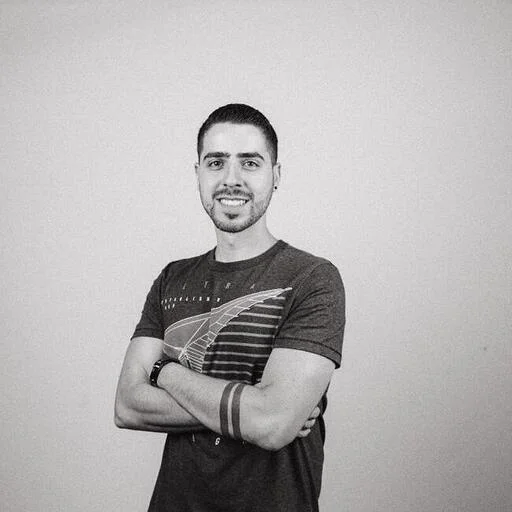
Black and white portrait of Marcelo Bavaroti with his arms crossed, in a dark t-shirt against a plain wall

Marcelo Bavaroti, Operations Owner

How work is conducted: cycles, sequencing, and the reporting around delivery.

We operate across Canada, Brazil, and the United States.

[IMAGE PLACEHOLDER] dez retratos reais, 1:1, mesmo enquadramento e tratamento de cor.

Small is not a claim. It is a constraint we design around

We do not publish client names without consent. We do not borrow credibility from partnerships we do not hold. We do not promise a percentage before the client can verify it independently.

What we can show is the operating logic, the decision boundaries, and the artifacts the work produces.

Judge the model by how it handles a request

See where intake closes, what requires approval, how execution stays bounded, and what counts as delivery evidence.