
Staff augmentation vs managed services: choose by what is missing
Last updated: November 27, 2026
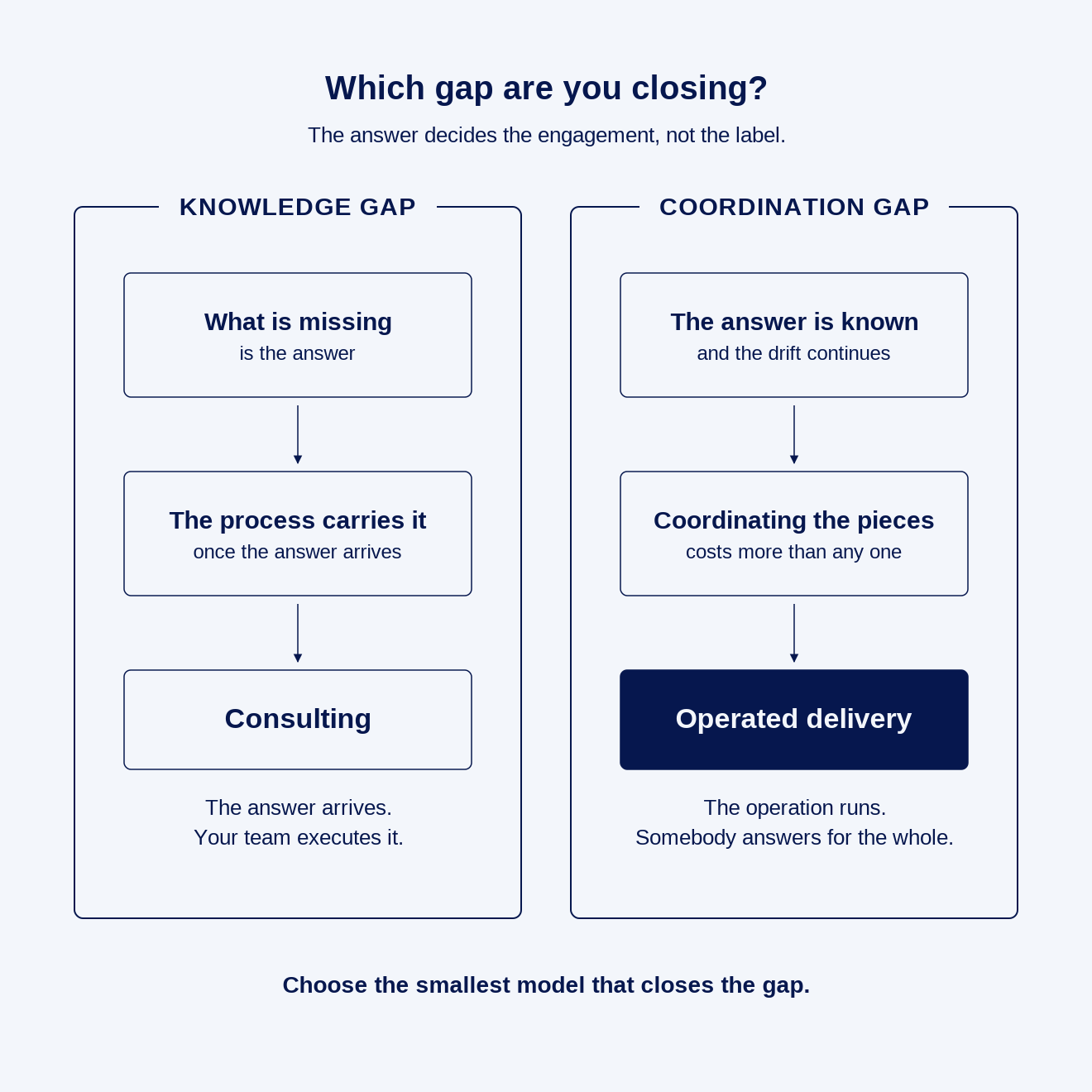
Staff augmentation adds people that your managers direct. Consulting adds an answer that your team carries out. Managed services hand a defined part of the work to a provider that runs it and answers for the result. For a software company with 5 to 20 developers, the right choice depends on what is missing: hands, knowledge, or someone who owns coordination and accountability.
Staff augmentation vs managed services vs consulting at a glance
| Staff augmentation | Consulting | Managed services (delivery partner) | |
|---|---|---|---|
| What you buy | People who join your team | An answer to a bounded question | A defined part of the work, run continuously |
| Who directs the work day to day | Your managers | Your team, after the handoff | The provider, inside the scope you approve |
| Who answers for the result | You | You | The provider, for the part it runs |
| What you must already have | A process you trust and managers with time | Authority and capacity to carry out the answer | Business authority and the approvals only you can give |
| Fits when | Capacity is the only gap | Knowledge is the only gap | Coordination and accountability are the gap |
| Stops working when | More people add coordination your process cannot absorb | Nobody can carry the answer into repeated work | You want to keep directing every task yourself |
The short answer for a team of 5 to 20 developers
If your process works and you only need more hands, choose staff augmentation. If you need an expert answer that your team can carry out, choose consulting. If work keeps coming back as rework and the founder or the technical lead is the bottleneck for every decision, the gap is coordination. A delivery partner that runs a defined part of the work is the better fit there.
What is staff augmentation, and when does it fit?
Staff augmentation means hiring outside professionals who work inside your team, under your managers, on your process. The provider supplies the people. You keep the direction, the priorities and the responsibility for what ships.
It fits when your process already carries the work and capacity is the only thing missing: a backlog you know how to run, managers with time to onboard and review, and decision rights that are already clear.
It stops working when the number of people was never the problem. If your team is hiring and delivery is not growing at the same rate, more people under the same process add coordination for the same few leads. Inventeer does not sell staff augmentation. When capacity is the only gap, a staffing firm is the right call.
What is consulting, and when does it fit?
Consulting supplies expert analysis for a bounded decision. The consultant answers the question, and your team keeps responsibility for carrying the answer into the work that follows.
It fits when the gap is knowledge:
- An architecture decision needs an independent review.
- A security or compliance question needs specialist analysis.
- The team needs a roadmap and has the authority and capacity to execute it.
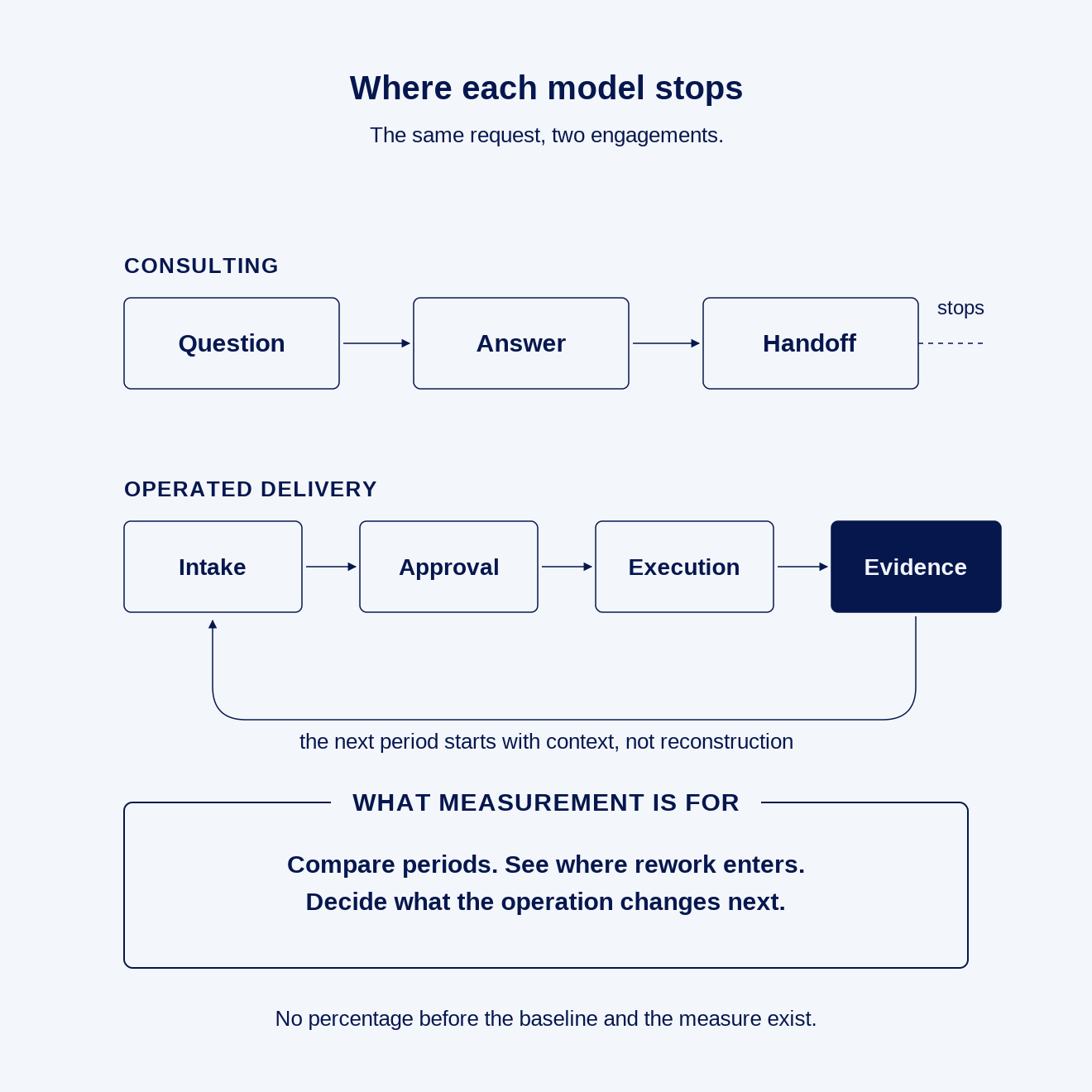
Before buying it, check that the question is narrow enough to answer, that the consultant can see the architecture, process or data the answer depends on, and that your team can execute the recommendation. The handoff should record the decision, the alternatives and the next action, so nobody needs the consultant to understand it later.
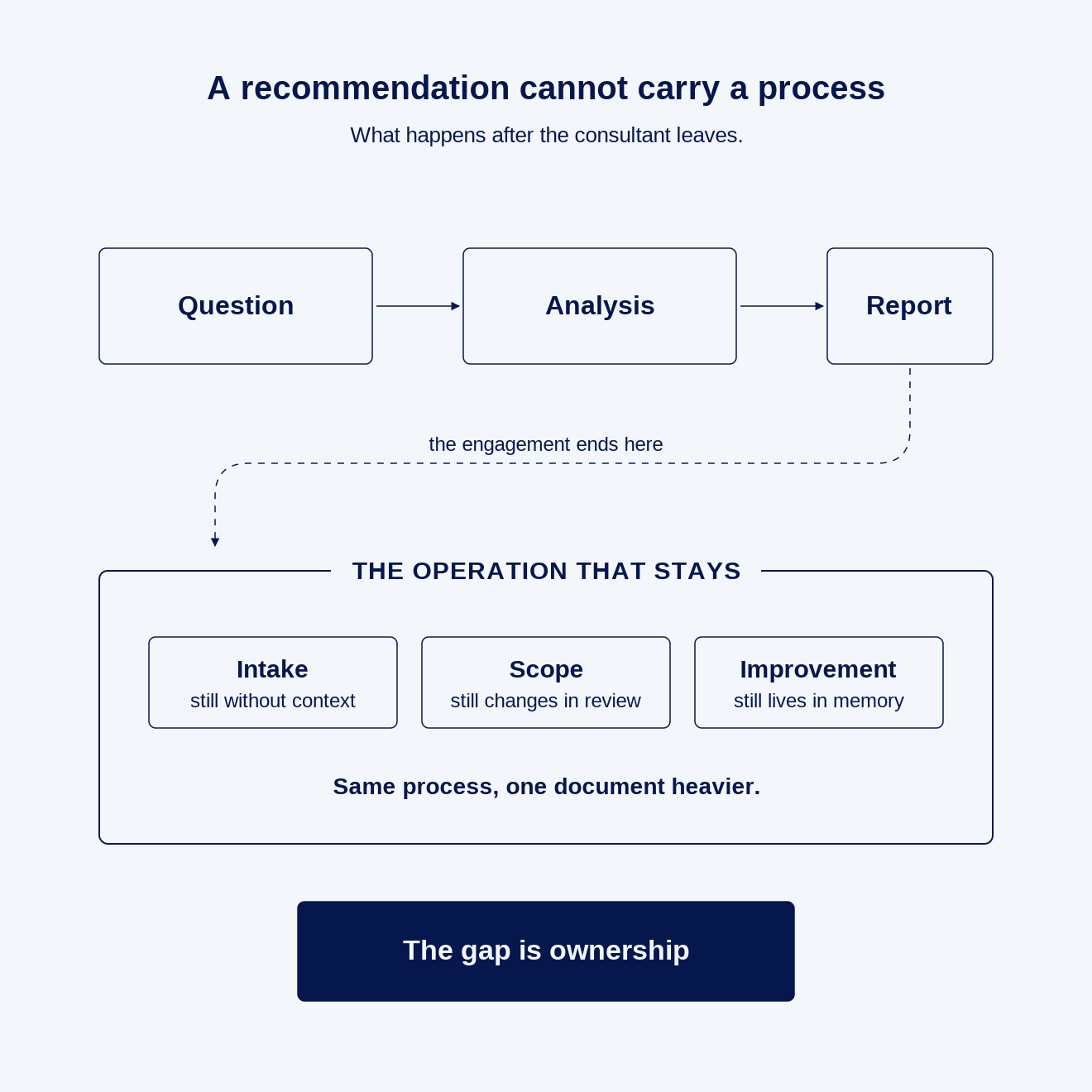
A recommendation cannot carry a process after the consultant leaves. Requests may still arrive without enough context, scope may still change inside review, and improvement may still depend on a few people remembering what was agreed. When that happens, what is missing is someone who owns how the work runs.
What are managed services in software delivery?
Managed services hand a defined part of the work to a provider that answers for the result. In software delivery, that is the delivery partner model: the provider takes on the whole operation or a bounded dedicated cell, with its own people, process and method.
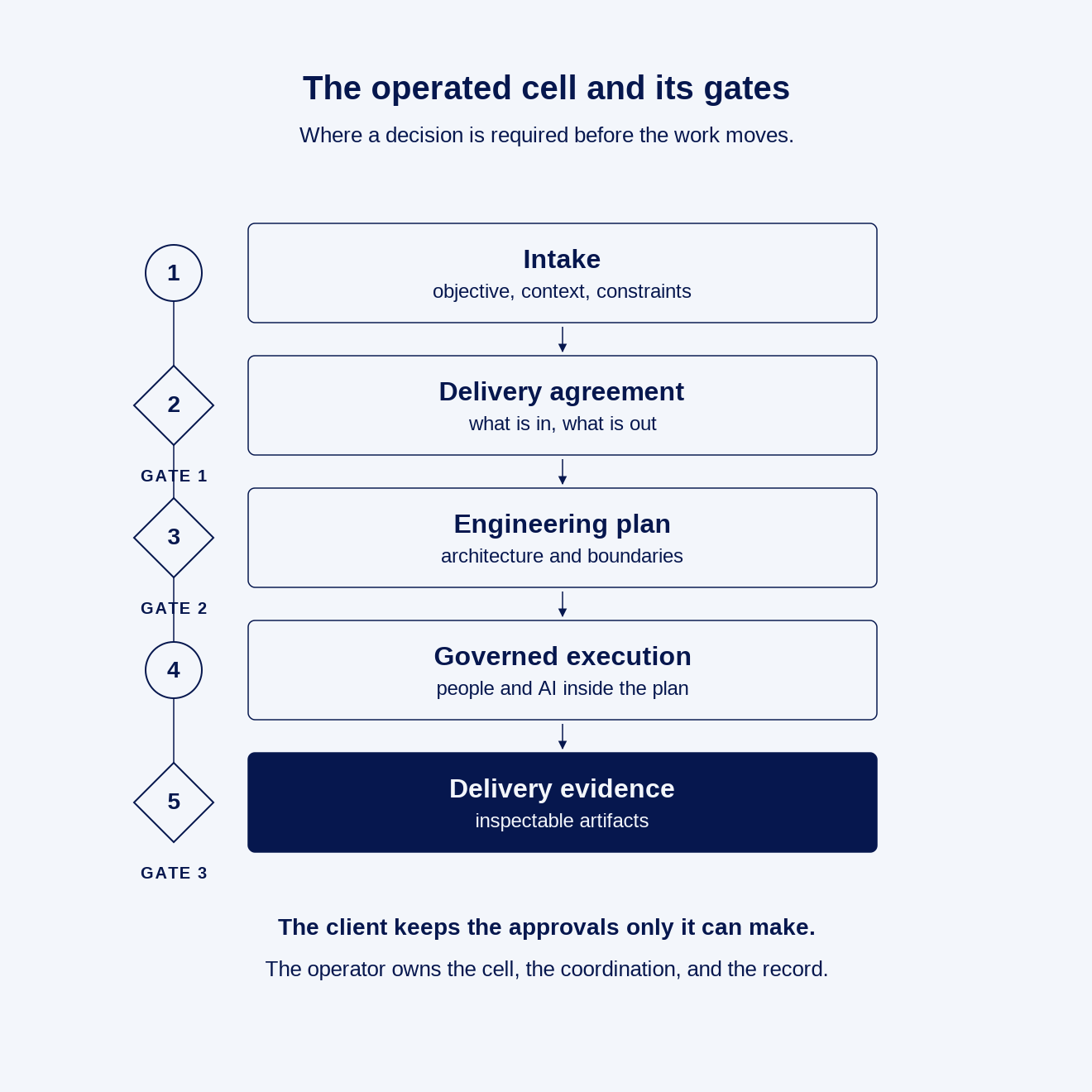
You keep business authority and the approvals only you can make. The partner owns the agreed part of the work, including coordination, execution discipline and the record that connects each result to the decision behind it. Work starts from structured intake, runs inside an approved scope, and is closed with evidence.
In a managed services engagement, measurement lets you compare one period with the next, see where rework enters, and decide what the operation should change. No percentage should be promised before the baseline and the measure exist.
Inventeer works in the managed services (delivery partner) model. What we promise:
We engineer software operations that get better every quarter with the same team: higher quality, less rework, and a ceiling that keeps moving. Every claim we make about it is a number you can check.
See how a delivery partner runs the work and the questions to ask before choosing one.
Staff augmentation vs outsourcing
Outsourcing covers several arrangements, and staff augmentation is its narrowest form: outside people join your team and work inside your process. Outsourcing a project hands a defined build to another company, with a fixed scope or a scope that moves as the work goes, and the work often continues afterwards as a maintenance contract. A delivery partner takes on a defined part of the work and runs it as an operation, so each cycle starts from what the last one measured.
Not sure outsourcing is the right move at all? Start with what software development outsourcing hands over, and who answers for each model.
How should a team of 5 to 20 developers choose?
At this size, the founder or the technical lead often becomes the bottleneck for review, decisions and unblocking. Before choosing a model, name what is missing:
- Knowledge is missing: consulting.
- Capacity is missing inside a process you trust: staff augmentation.
- A defined technical capability is missing: a tool vendor.
- Coordination and accountability are missing: a delivery partner.
- The capability must stay inside the company for the long term: hire.
The gap is coordination rather than capacity when work arrives poorly defined and comes back as rework. Other signs: execution varies from person to person, quality depends on a few people, and nobody shares an answer to what done means. See how Inventeer works with engineering teams.
When is a delivery partner the wrong choice?
A delivery partner adds nothing when the problem is a single expert question, or when internal ownership and coordination already work. It is also the wrong model when you want temporary individuals under your own managers, when leadership will not change how work is requested, approved and closed, or when you need a one-time document with no execution behind it.
Choose the smallest model that closes the gap, whether that is consulting, staff augmentation or a tool. Hiring may be the better long-term choice.
Questions about staff augmentation, managed services and consulting
What is the difference between staff augmentation and managed services?
Staff augmentation adds outside people to your team, and your managers direct their work, set the priorities and answer for what ships. Managed services hand a defined part of the work to a provider, which runs it with its own people and process and answers for the result. The difference is who owns coordination.
For the work that falls outside the provider’s invoice, see what drives custom software development cost before and after launch.
What is the difference between staff augmentation and outsourcing?
Staff augmentation is the narrowest form of outsourcing: outside people join work you keep running inside your own process. Outsourcing a project hands a defined build to another company, with a fixed scope or a scope that moves as the work goes, often followed by a maintenance contract. A project fits a bounded build, and staff augmentation fits ongoing work your team already knows how to run.
What is the difference between staff augmentation and consulting?
Staff augmentation supplies people who do the work under your direction. Consulting supplies an expert answer to a bounded question, such as an architecture review or a compliance gap, and your team carries it out. Choose consulting when knowledge is missing, and staff augmentation when hands are.
Can a company combine staff augmentation and managed services?
Yes. A company can keep core product work in its own team, add capacity through staff augmentation where its process already works, and hand a bounded part of the work to a delivery partner. Each part needs one clear owner, so nobody has to guess who answers for a result.
Can a company need consulting before a delivery partner?
Yes. A bounded architecture, security or strategy question may need an answer before the work can be defined. Keep the two engagements separate, so advice is not mistaken for approval to execute, and so the partner starts from a decision your team already owns.
When should we hire internally instead?
Hire when the missing capability must stay inside the company for the long term and you can support it with management, career paths and enough continuous work. Hiring usually takes longer to start than an outside model, so it fits a gap you expect to keep, not a short spike in demand.
Still weighing the model? Get our notes by email
Inventeer’s newsletter brings short, practical notes on delivering software with AI. You can unsubscribe at any time.